
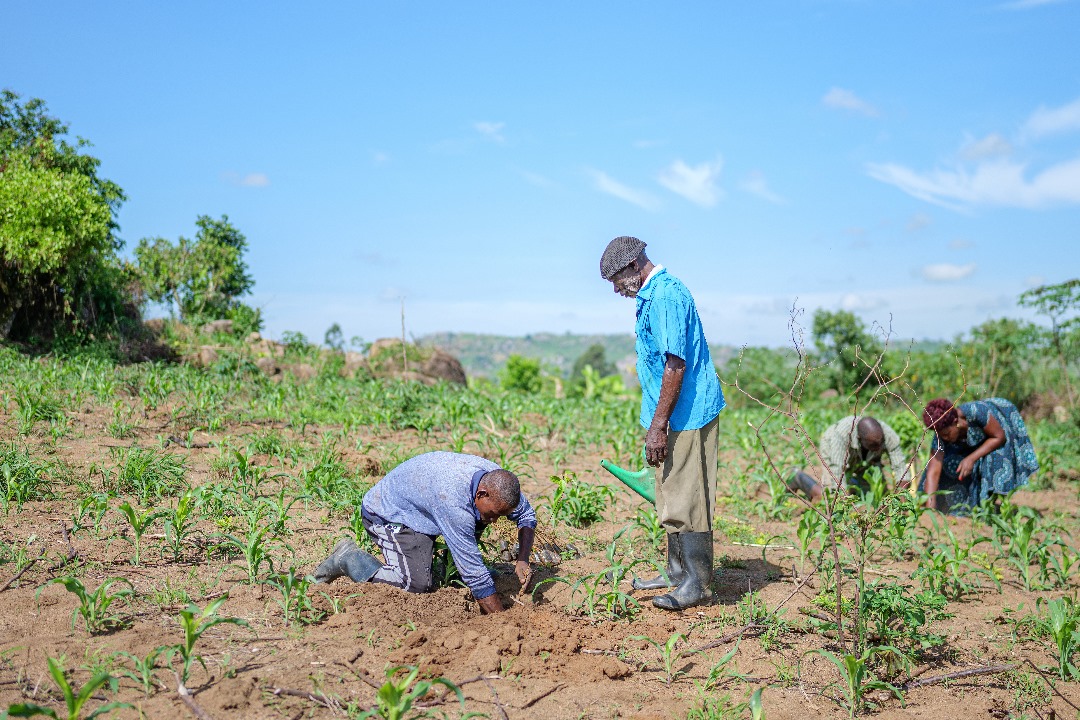
KAMPALA — Employment in Uganda's agriculture sector has declined from 40 percent to 37.1 percent over the past year, while the services sector has strengthened its position as the country's largest employer, now accounting for more than half of all jobs.
The figures were revealed by Finance Minister Henry Musasizi during the presentation of the 2026/27 national budget at Kololo Ceremonial Grounds on Thursday.
According to Musasizi, the services sector now accounts for 50.5 percent of total employment, up from 47 percent a year ago, while industry contributes approximately 12.4 percent.
“The ultimate test of economic policy is whether it improves the livelihoods of our people through productive employment. Uganda’s economy is gradually undergoing structural transformation,” Musasizi told Parliament.
“The services sector now accounts for 50.5 percent of total employment, up from 47 percent a year ago, while the share of employment in agriculture has declined from 40 percent to 37.1 percent. On the other hand, industry accounts for approximately 12.4 percent of total employment,” he added.
The minister said the changing employment pattern reflects a broader shift from low-productivity economic activities to sectors that generate greater value and higher incomes.
“These shifts are good and are consistent with the structural transformation experienced by today’s rich economies, which moved from low- to higher-productivity sectors,” Musasizi said.
The latest figures come as Uganda continues to pursue industrialisation and private sector-led growth under its National Development Plan, with government officials increasingly measuring economic performance through job creation rather than growth figures alone.
Musasizi also reported a sharp rise in formal private-sector employment over the last eight years. The number of workers in private formal establishments increased from approximately 672,300 in the 2016/17 financial year to more than 2.3 million in 2024/25.
“Employment in private formal establishments has increased by 245 percent from approximately 672,300 workers in FY2016/17 to over 2,319,683 workers in FY2024/25,” he said.
Despite the growth in formal employment, the majority of Ugandans remain employed in the informal sector.
Government data shows that as of April 2026, Uganda had 503,738 public-sector jobs compared to 10.5 million people working in informal employment.
“This is in addition to the 503,738 public sector jobs and 10,513,014 informal jobs reported in April 2026. This growth in jobs confirms that Uganda’s economy is not only growing but also creating productive jobs for Ugandans,” Musasizi said.
He attributed the trend to deliberate government interventions aimed at promoting industrialisation, enterprise development and wealth creation.
However, the minister acknowledged that generating sufficient employment opportunities remains one of the country's biggest economic challenges, particularly given Uganda's youthful and rapidly expanding population.
“Creating more productive jobs for our rapidly growing population remains an urgent economic priority. This is why the Government is investing in ATMS and their enablers to create jobs at scale, especially for young people,” he said.
Musasizi emphasized that future government spending will increasingly be assessed against its ability to generate jobs, raise incomes and improve household livelihoods.
“Going forward, every major intervention in the National Budget will ultimately be judged by its contribution to jobs, incomes and improved livelihoods,” he said.
